
Application-led selection
Consider film thickness, molded-part geometry, resin, and required visual coverage.
The Polymaid range
Explore masterbatch and mineral-filled compounds for your production process.
All productsMasterbatch & filler
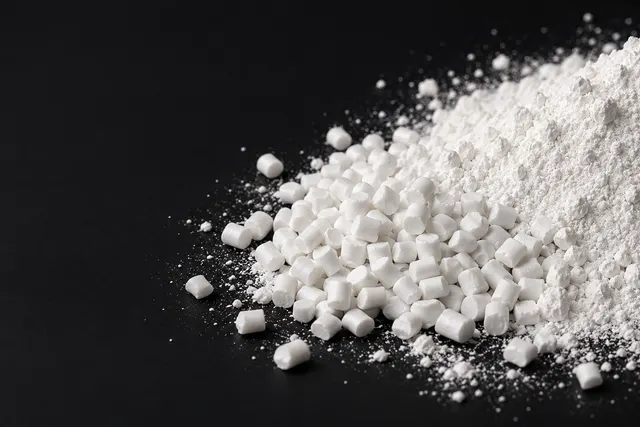
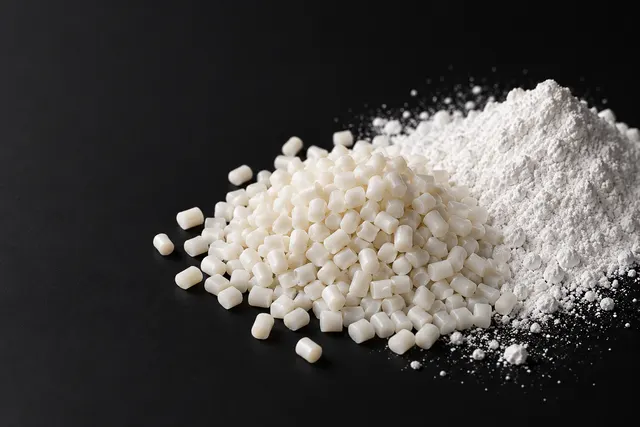
PolyVite white masterbatch options for film, molding, extrusion, and plastic products, selected around resin, opacity, finish, and process.
Product overview
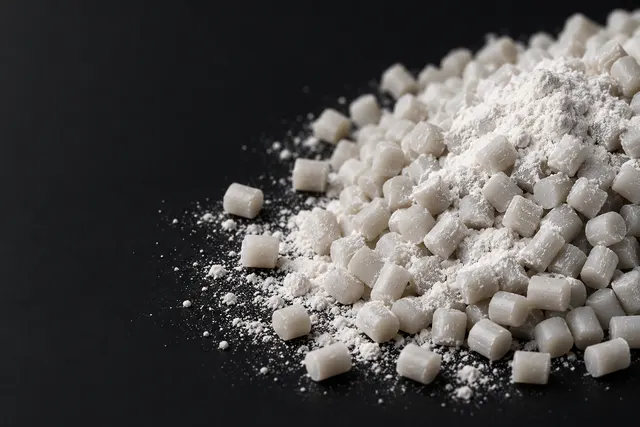
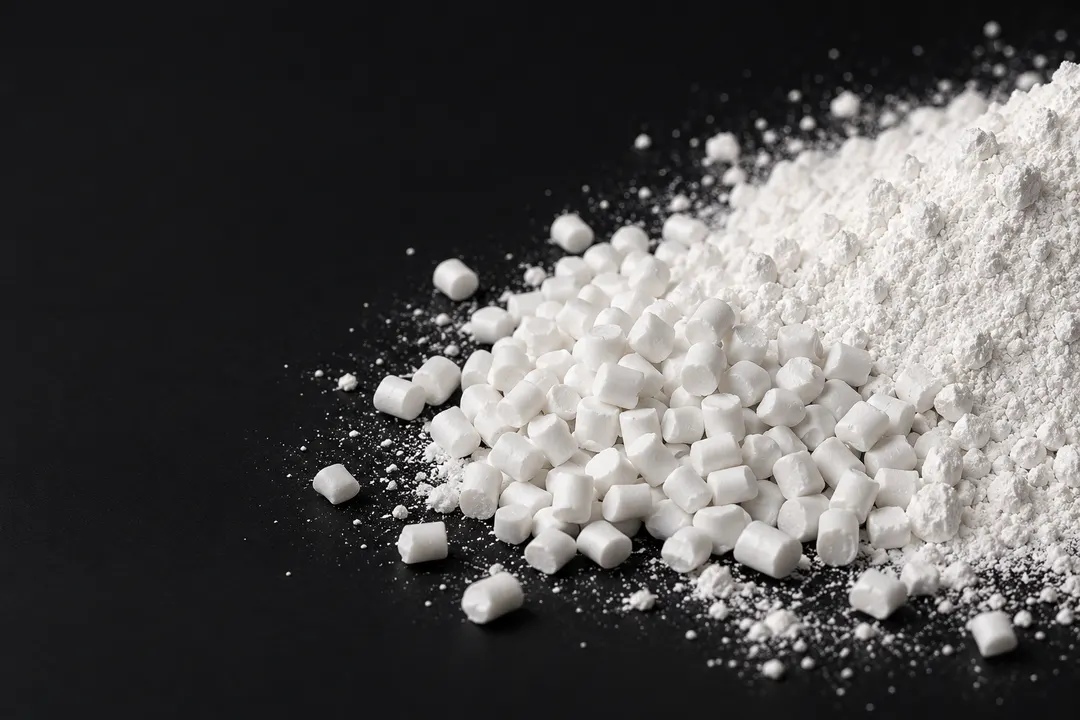
Polymaid’s PolyVite white masterbatch range is discussed around opacity, brightness, surface appearance, base polymer, processing method, and part or film thickness. Published grades span different titanium dioxide concentrations for different production contexts.
Consider film thickness, molded-part geometry, resin, and required visual coverage.
Published PolyVite options cover a range of titanium dioxide loadings for different uses.
Frame the request for film, injection molding, blow molding, rotational molding, or extrusion.
Applications
Explore potential applications, then confirm the right grade for your resin and production conditions.
Explore manufacturing processes ↗PolyVite grade reference
Polymaid's previously published PolyVite range used six titanium-dioxide concentration levels. This chart restores that useful starting point while keeping final selection tied to the resin, dosing rate, thickness, and opacity target.
| PolyVite grade | TiO2 concentration | Published application starting point |
|---|---|---|
| PVite30 | 30% | General-purpose PE film |
| PVite40 | 40% | Blow-molded items |
| PVite50 | 50% | Thick film; injection, blow, and rotational molding |
| PVite60 | 60% | HD film and blow molding |
| PVite70 | 70% | Injection molding and tape extrusion |
| PVite70 Plus | >70% | Thin film and blow molding |
How to use this chart: TiO2 concentration is the pigment level inside the masterbatch, not the recommended dose into the final polymer. Confirm the carrier, let-down ratio, film or wall thickness, and target opacity through a production trial.
White masterbatch selection depends on more than whiteness. Film gauge, wall thickness, surface finish, dosing level, carrier system, and the natural color of the base resin can all change the visible result.
A practical brief should state whether the priority is opacity, brightness, tinting strength, surface finish, or a combination of these factors.
PolyVite grades are intended to be reviewed against the customer’s actual material and process. The correct option for a thin film may differ from the option selected for a thick molded part.
Share the base resin, process, product thickness, target appearance, and any existing grade or sample. Trial and approval in the intended application remain essential before full production.
Product questions
PolyVite is the name used for Polymaid’s white masterbatch range. Published options cover different titanium dioxide concentrations and application contexts.
Selection should consider resin, process, film or wall thickness, dosing, opacity, and finish. Send those details so the team can review the most relevant option.
Possibly, but suitability should not be assumed. Thin film and molded parts can require different concentration, carrier, dispersion, and processing characteristics.
Keep exploring
Let’s make it work for you
Bring us your resin, process, and target. We’ll help you take the next step.