
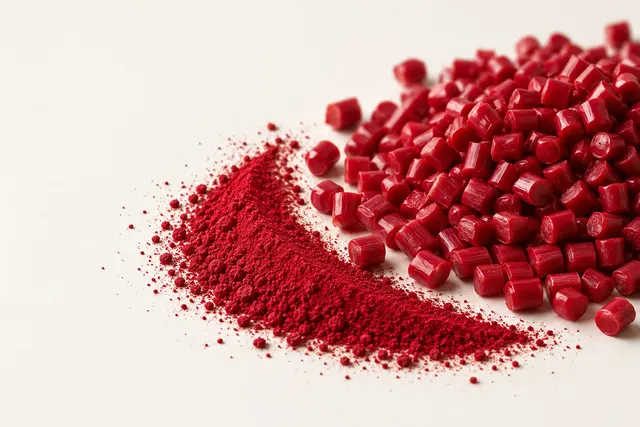

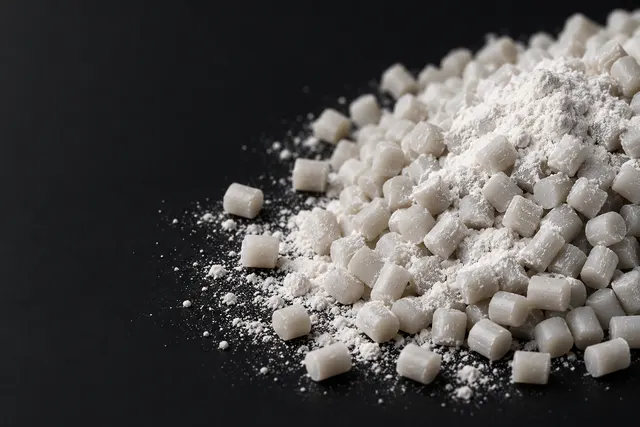

Define color and opacity
Share a physical sample or color reference, plus the desired transparency, gloss, and surface texture.
The Polymaid range
Explore masterbatch and mineral-filled compounds for your production process.
All productsMarkets & applications
Explore Polymaid masterbatch and Calpet / filler for packaging, bottles, film, pipes, housewares, and automotive parts. Find a starting point for your application.

Masterbatch carries concentrated pigment or other ingredients in a compatible polymer carrier. It is blended with the base resin during plastics processing. The right choice starts with what the finished item needs to look like, how it will be made, and where it will be used.
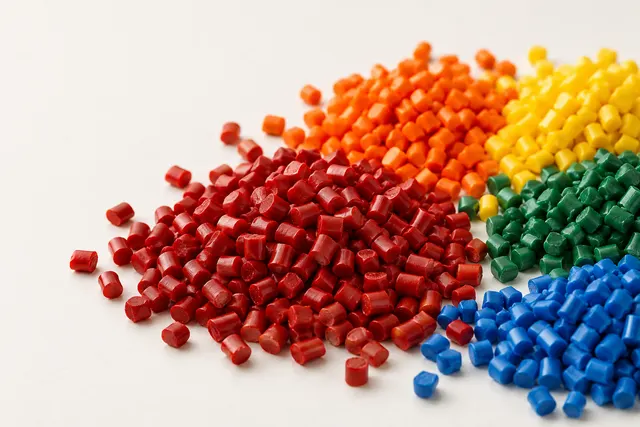
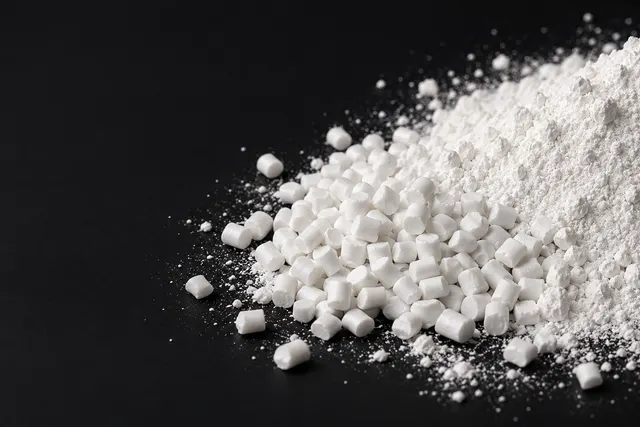
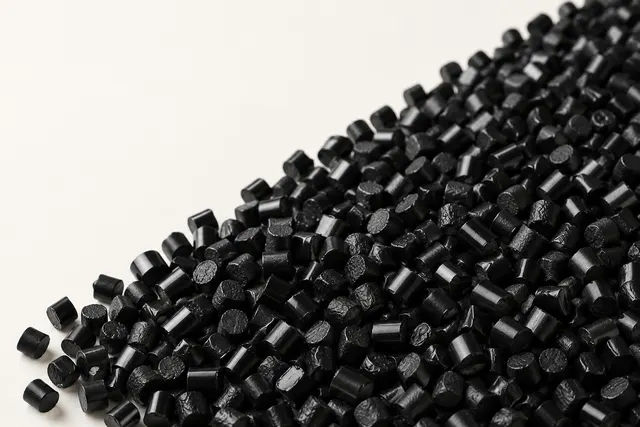
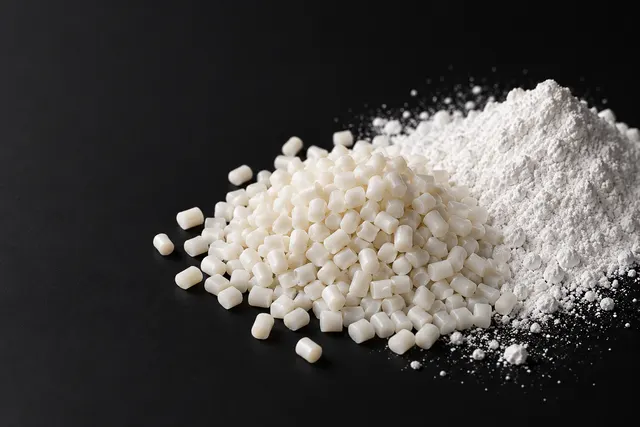
Polymaid manufactures color, white, black, PVC, and special-effect masterbatch, alongside Calpet / calcium filler and talc-filled compounds. Explore the applications below to identify a product family and build a useful brief for your sample or quotation.
Share a physical sample or color reference, plus the desired transparency, gloss, and surface texture.
Include the base polymer, resin grade, recycled content, and any existing filler in the formulation.
Tell us the product dimensions, use conditions, and customer requirements so the grade can be reviewed in context.

Application
Color masterbatch gives caps, closures, and rigid packaging a recognizable brand shade. White masterbatch supports an opaque appearance, while black masterbatch provides dark finishes for suitable packaging designs.
For a matching container and closure, share both resin grades and physical samples. Differences in wall thickness, texture, and molding conditions can affect the perceived color. Include the intended contents and any food-contact requirements in your masterbatch enquiry.
Explore masterbatch & filler families
Application
Masterbatch helps define the color, opacity, and visual finish of molded bottles and containers. Color, white, and special-effect masterbatch offer different starting points for household, personal-care, and industrial packaging.
Tell us whether you need a transparent tint, an opaque wall, or a decorative effect. The carrier must suit the bottle resin, including the specific PE, PP, or PET grade. Evaluate the proposed masterbatch in the finished container, including its thinnest sections.
Explore masterbatch & filler families

Application
Black and color masterbatch are used to develop pipe and fitting shades, while PVC masterbatch addresses the requirements of PVC formulations. Selection begins with the resin and the function of the finished pipe or profile.
Specify pressure or non-pressure service, installation conditions, dimensions, and the applicable product specification. Carrier compatibility and pigment dispersion matter. Discuss Calpet / filler separately for suitable formulations; a filler grade for a non-pressure product should not be assumed suitable for a pressure-rated pipe.
Explore masterbatch & filler families

Application
Color and black masterbatch support consistent shades across molded pails, bins, and storage products. Calpet / calcium filler can also be evaluated where material cost and the required mechanical properties need to be balanced.
Share the polymer, recycled content if used, part weight, and wall thickness. Review the masterbatch and filler together with handle strength, impact requirements, and the desired surface finish. A trial in the actual mold helps assess the complete formulation.
Explore masterbatch & filler families

Application
Color masterbatch brings a coordinated palette to housewares, storage accessories, and other consumer products. White masterbatch offers an opaque finish, while special-effect masterbatch can introduce metallic or pearlescent appearances in suitable formulations.
Provide a physical color standard and describe the product's gloss, texture, and viewing conditions. The same masterbatch can look different in a smooth lid and a textured body. For matching product sets, include each resin and representative finished parts.
Explore masterbatch & filler families

Application
White, black, and color masterbatch help control the appearance of film and sheet. Calpet / filler masterbatch can be considered for suitable resin systems where mineral loading is part of the material specification.
Film gauge, layer structure, and pigment dispersion are central to selection. Include the resin blend, required opacity, and targets for strength and sealing. For sheet that will be thermoformed, assess the masterbatch color and opacity again after drawing the final shape.
Explore masterbatch & filler families
Application
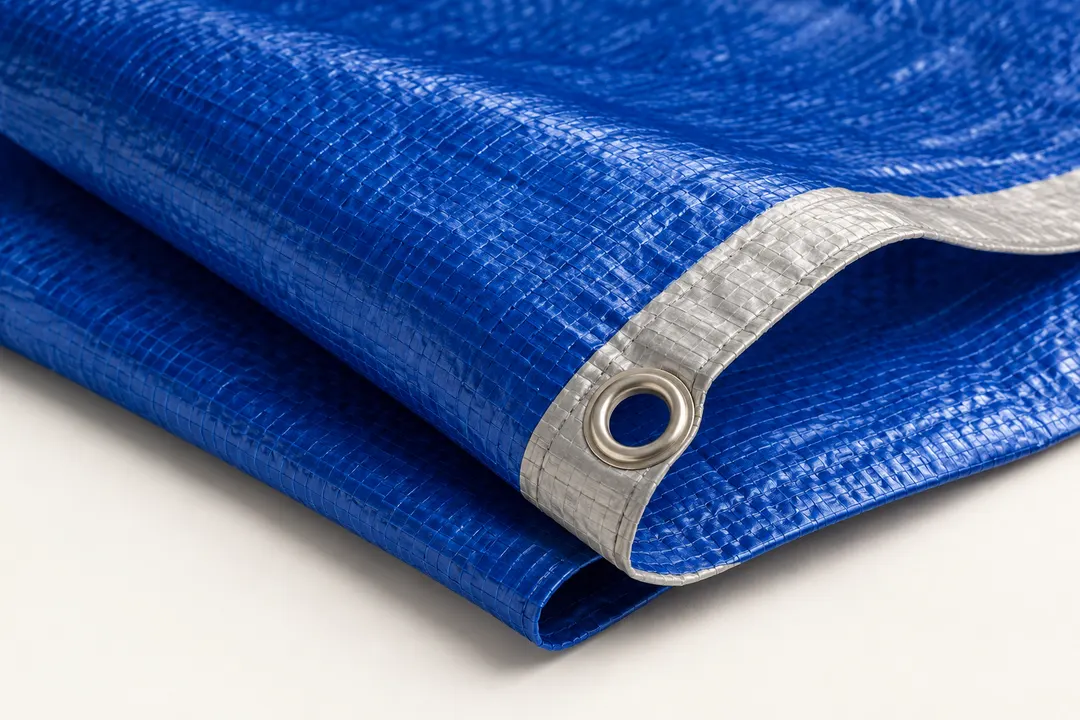
Masterbatch selection for woven sacks, raffia, and tarpaulin starts with the tape or coating layer being colored. Color and white masterbatch can define appearance; Calpet / filler can be reviewed against the requirements of suitable formulations.
A woven structure and its coating may need different material briefs. Share the resin, tape dimensions, draw conditions, coating thickness, and strength requirements. Discuss outdoor exposure and any stabilization requirements separately from the color target.
Explore masterbatch & filler families
Application
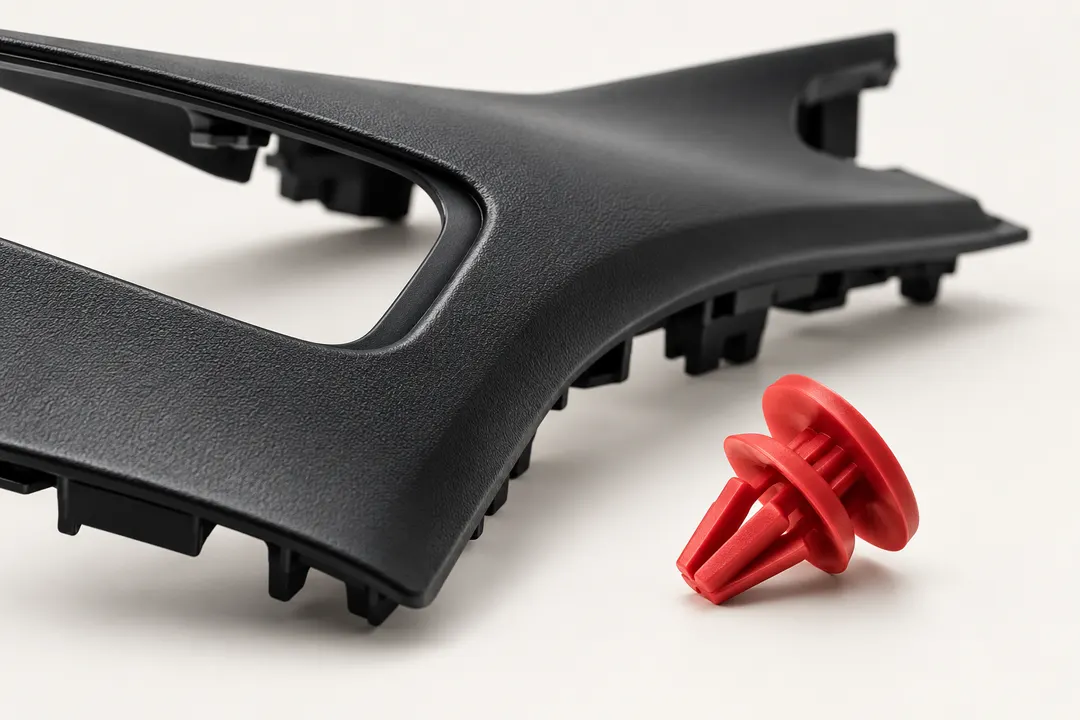
Black, color, and special-effect masterbatch can be considered for the appearance of molded automotive components. Talc-filled compounds offer a separate route for formulations where stiffness and dimensional performance are part of the brief.
Identify the component, base polymer, interior or exterior use, and customer specification. Develop the shade alongside the required surface texture and material properties. Review samples and test results against the actual component requirements before selecting a production grade.
Explore masterbatch & filler families
Know your application? Match it to your process.Explore masterbatch selection for molding, extrusion, and thermoforming.
Explore manufacturing processes ↗Start with the intended result: color masterbatch for a target shade, white for a white opaque appearance, or black for a black finish. For a mineral-filled formulation, discuss Calpet or talc-filled compounds separately. Share the polymer and process so Polymaid can review the appropriate grade.
Sometimes, but the same concentrate can look different when resin, wall thickness, texture, or processing changes. For matching bottles, caps, or housewares, provide a sample of each component and its resin grade rather than choosing by the masterbatch pellet color alone.
Send the product family or target shade, base polymer, manufacturing process, intended application, and expected quantity. A physical sample, color reference, part drawing, or existing specification helps us understand the requirement. Include your delivery location and contact details.
Let’s make it work for you
Bring us your resin, process, and target. We’ll help you take the next step.